 English
 Deutsch
 русский

If you sit in front of a computer for 6-10 hours every day, and shoulder and neck pain, lower back stiffness, and neck discomfort have become commonplace, then you've probably heard the saying: "Sitting for long periods is more dangerous than smoking."
Because of this, electric adjustable desks are increasingly seen as a "miracle cure" for waist and cervical spine problems.
But the question is: are electric adjustable desks really effective? Do they actually improve the problem, or do they just change the posture while still harming the body?
1. What truly harms the waist and cervical spine is not "sitting" itself
Many people think that as long as they don't sit, their lumbar and cervical spine problems will be solved. However, from a medical and ergonomic perspective, the real problem is "maintaining the same posture for a long time."
Sitting for long periods: high pressure on the lumbar spine, forward neck tilt
Standing for long periods: lower limb fatigue, similar tension in the lower back
In other words, whether sitting or standing, if the duration is too long, it will put a burden on the body.
The core value of an electric adjustable desk is not "standing is healthier," but rather: allowing you to frequently switch between sitting and standing, reducing the cumulative damage caused by a single posture.
2. Does an electric adjustable desk actually help the waist and cervical spine?
Based on a large amount of user feedback and actual usage, three points can be clarified:
(1) More friendly to "preventive users"
If you only experience mild discomfort, such as occasional aches and stiffness, rather than serious disease, then an electric adjustable desk does have a relieving effect.
By standing while working, you will unconsciously adjust your posture, reducing slouching and forward neck extension.
(2) Cannot "treat" existing diseases
If you already have obvious cervical spondylosis or lumbar disc herniation, an electric adjustable desk cannot replace medical treatment.
It can only serve as an auxiliary tool to help reduce the risk of further deterioration.
(3) How you use it is more important than the product itself
Many people buy adjustable desks but only raise them once a day, or even stand for long periods while working, which actually increases the burden on their lower back. The correct way to use it is:
Switch postures every 30-60 minutes.
The ratio of sitting to standing should be approximately 7:3 or 6:4.
3. Why do some people feel even more tired after using it?
This is often not a problem with the standing desk itself, but rather due to misuse:
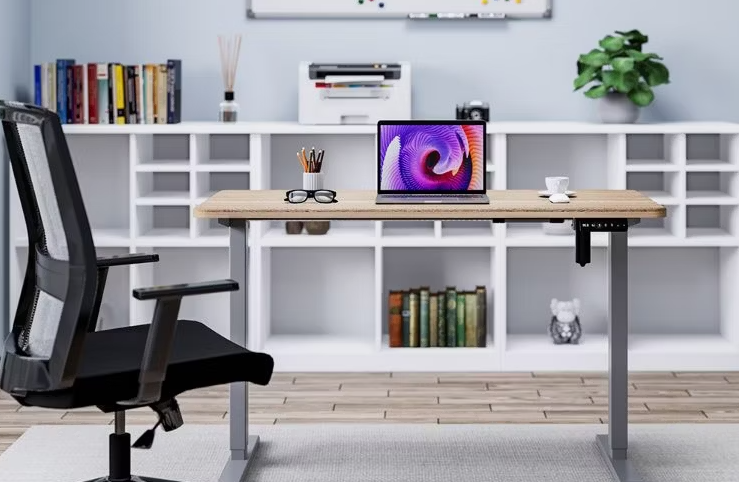
Incorrect desk height, leading to shrugged shoulders or hunching.
Monitor is too low, causing continuous forward neck tilt.
Body stiffness while standing, without shifting weight.
Ignoring auxiliary tools such as footrests and anti-fatigue mats.
An electric standing desk is just a "platform"; if the ergonomic settings are not properly adjusted, the effect will naturally be greatly reduced.
4. Which sedentary workers should consider an electric standing desk the most?
Based on actual experience, the following groups benefit the most:
Office workers who sit for more than 6 hours a day.
Programmers, designers, and writers.
Those who work from home or are freelancers.
People who are already aware of posture problems and are willing to actively adjust their posture.
However, if you only occasionally use a computer, or if you buy one but are unwilling to stand up, its value will be severely wasted.
5. Can it "save" your back and neck?
The truth is: it can't save them, but it can significantly reduce the damage.
An electric standing desk is not a miracle cure; it won't automatically repair your cervical and lumbar spine;
But if you are willing to change your sedentary habits and use it properly, it can indeed become a "stress-reducing tool" for long-term work.
What truly determines your physical condition is never just a desk, but rather: whether you are willing to move, and whether you continuously make changes.