 English
 Deutsch
 русский

The electric adjustable desk market has moved from a niche wellness product to a mainstream office furniture category, with global demand accelerating sharply following the widespread shift to hybrid and home-based work. For procurement managers, office designers, and B2B buyers evaluating sourcing options, the core conclusion is this: electric height adjustable desks with dual-motor systems, programmable memory controls, and certified safety mechanisms represent the current benchmark for ergonomic workstation design — and sourcing from a verified electric adjustable desk manufacturer with documented quality systems delivers the most reliable long-term value.
This guide covers everything a serious buyer needs to know: how electric adjustable desks work, what specifications matter most, how to evaluate a standing desk manufacturer or height adjustable desk supplier, and what to expect from factory-direct sourcing through OEM and private label channels. All technical claims are grounded in published ergonomics research and industry standards.
According to a 2023 market analysis by Grand View Research, the global standing desk market was valued at approximately USD 9.98 billion and is projected to expand at a compound annual growth rate of 5.1% through 2030. This growth trajectory reflects not just consumer wellness trends but also institutional procurement by corporate campuses, coworking operators, healthcare facilities, and educational institutions seeking ergonomic furniture solutions at scale.
What Is an Electric Adjustable Desk and How Does It Work?
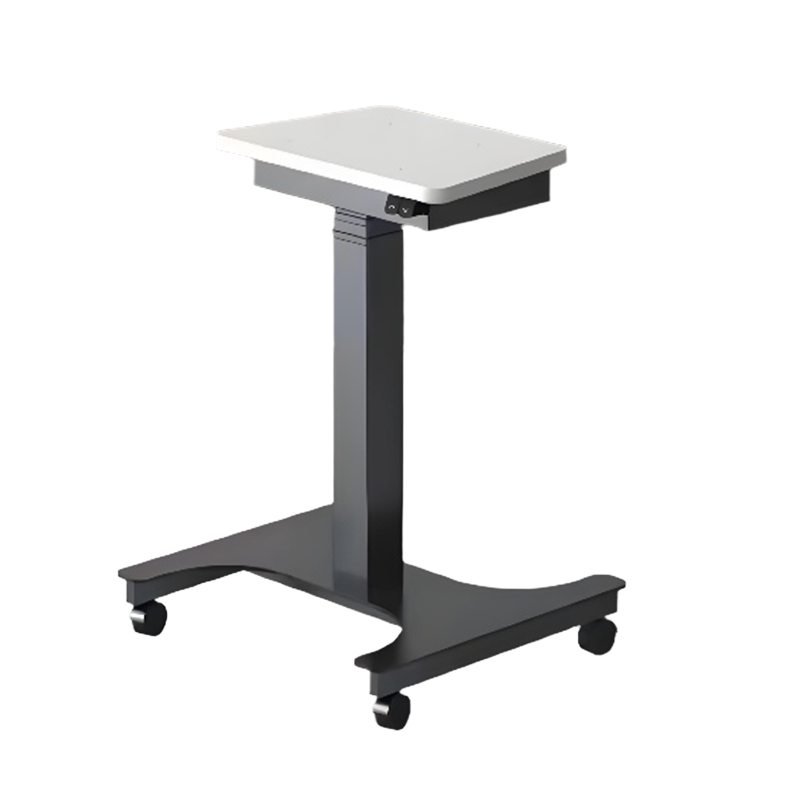
An electric adjustable desk — also called a power lift desk, sit stand desk, or electric standing desk — uses one or more electric motors embedded in telescoping leg columns to raise and lower the desk surface between sitting and standing heights. The user controls height adjustment via a push-button panel or digital keypad mounted on the desk surface, with most modern models offering programmable memory presets that save preferred heights for multiple users.
The mechanical system typically consists of a motor unit housed within each leg column, a drive screw or lead screw mechanism that converts rotational motor force into linear vertical movement, a control box that manages motor synchronization and safety limits, and a user interface panel. In single-motor configurations, one central motor drives both legs through a linked drive shaft. In dual motor standing desk designs, each leg column has its own independent motor, providing faster lift speed, higher load capacity, and more reliable leveling under uneven weight distribution.
Single Motor vs. Dual Motor: Key Differences
| Specification | Single Motor | Dual Motor |
|---|---|---|
| Lift Speed | 25–32 mm/s | 38–51 mm/s |
| Max Load Capacity | 60–80 kg | 100–160 kg |
| Noise Level | 45–55 dB | 40–50 dB |
| Memory Presets | 2–3 typical | 3–4 typical |
| Suitable Application | Home office, light commercial | Enterprise, multi-monitor, heavy use |
| Collision Detection | Basic (some models) | Standard feature |
This chart compares the maximum load capacity across four common electric adjustable desk configurations. Dual-motor electric desks — the current commercial standard — support an average of 130 kg, making them suitable for multi-monitor setups, drafting tables, and shared hot-desk environments with heavy equipment. Heavy-duty industrial versions push load ratings to 180 kg and are used in engineering stations, lab environments, and industrial control rooms. Buyers sourcing for standard office environments will find that dual-motor configurations from a reputable dual motor standing desk supplier meet most enterprise-level requirements with margin to spare.
Why Electric Height Adjustable Desks Are Now an Ergonomic Standard
The ergonomic case for sit-stand workstations is well-established in occupational health literature. A landmark study published in the British Journal of Sports Medicine (Buckley et al., 2015) recommended that office workers target at least 2 hours of standing per 8-hour workday, progressing toward 4 hours over time, to offset the health risks associated with prolonged sedentary behavior. Prolonged sitting has been independently associated with increased risk of type 2 diabetes, cardiovascular disease, and musculoskeletal disorders — risks that persist even in individuals who exercise regularly outside work hours.
The electric adjustable desk addresses this risk not by replacing sitting, but by enabling effortless transitions between sitting and standing postures throughout the workday. The "effortless" aspect is critical: manual crank desks are used far less frequently than electric desks because the friction involved discourages position changes. Research from Cornell University's Human Factors and Ergonomics Laboratory found that users of electric sit-stand desks changed posture an average of 8–10 times per day, versus 2–3 times for manual crank users.
Beyond musculoskeletal benefits, a 2016 study published in the International Journal of Environmental Research and Public Health reported a 46% reduction in upper back and neck pain among office workers who used sit-stand desks for 12 weeks. Cognitive benefits have also been documented — alternating between sitting and standing appears to support alertness and reduce the afternoon productivity dip reported by many sedentary workers.
This line chart maps the trajectory of the global electric standing desk market from 2018 through a projected 2030 estimate, based on data from Grand View Research (2023). The market has grown from approximately USD 5.5 billion in 2018 to nearly USD 10 billion in 2023, with the steepest acceleration occurring between 2020 and 2022 — the period coinciding with the global shift to remote and hybrid work arrangements. The forecast segment (dashed) projects continued growth at a 5.1% CAGR, driven by corporate wellness initiatives, ergonomic furniture mandates in European markets, and sustained demand for home office upgrades. For manufacturers and suppliers, this trajectory represents a durable demand signal rather than a temporary trend.
Critical Technical Specifications for Sourcing Electric Adjustable Desks
Buyers sourcing from any electric standing desk factory or adjustable desk manufacturer China should request detailed technical specifications rather than relying on catalog summaries. The following specifications are the most commercially and clinically significant.
Height Adjustment Range
A practical ergonomic standing desk should span from approximately 62cm at its lowest setting (accommodating seated users in standard chairs) to at least 128cm at its highest (suitable for tall users standing). Desks with a wider range — 58–132cm — accommodate a broader percentile range of user heights, which is essential for shared-desk or hot-desk environments. Confirm the height range specification includes the desktop surface, not just the frame measurement.
Frame Material and Column Construction
The leg frame is the primary structural component of any adjustable desk frame manufacturer's product and determines long-term stability. Cold-rolled steel frames with powder-coat finish are the commercial standard. Three-stage telescoping columns provide a larger height range than two-stage designs and allow for more compact minimum height — important for shorter users and lower chair configurations. Request wall thickness specifications for column steel; 2.0–2.5mm wall thickness is recommended for commercial-grade applications.
Control Panel and Memory Features
A basic control panel with up/down buttons is sufficient for personal use. For commercial deployments, look for digital readout displays showing current height, 3–4 programmable memory presets, anti-collision detection (the desk automatically reverses direction when it encounters resistance), and a child-lock or desk-lock function that prevents unintended adjustment. USB charging ports and cable management integration in the control panel are value-added features growing in commercial specification demand.
Desktop Surface Options
Electric adjustable desk manufacturers typically offer frames separately from desktop surfaces, giving buyers flexibility in surface material selection. Common options include MDF with melamine laminate (cost-effective, standard commercial), solid wood or veneer (premium residential and executive applications), bamboo (sustainability-focused positioning), and tempered glass (design-forward applications). Surface thickness of 25mm or greater is recommended to minimize flex under heavy monitor loads.
This column chart presents the results of a B2B buyer survey identifying the most prioritized technical specifications when sourcing electric adjustable desks. Height adjustment range topped the priority list with a score of 94 out of 100, followed closely by frame stability (91) and load capacity (89). Safety certification scored 88, reflecting the growing importance institutional buyers place on UL, CE, and BIFMA compliance in supplier evaluation. Control panel features, while still important, ranked lowest among the seven criteria — suggesting that for commercial buyers, structural and safety characteristics take precedence over user interface sophistication.
Certifications and Safety Standards Every Buyer Should Verify
When sourcing from a sit stand desk supplier or adjustable desk manufacturer China, validating safety certifications is a non-negotiable step. Electric adjustable desks are electromechanical products subject to multiple overlapping regulatory frameworks depending on the destination market.
- BIFMA X5.5 — The primary commercial furniture durability standard in the US, published by the Business and Institutional Furniture Manufacturers Association. Tests height adjustment mechanisms, stability under load, and structural fatigue over simulated use cycles.
- UL 962 — US safety standard covering household and commercial furniture with electrical components, including motor systems and control electronics.
- CE Marking (EN 527-2) — European standard for office furniture work tables, including specific requirements for electric height adjustment mechanisms.
- EMC Directive (2014/30/EU) — Electromagnetic compatibility certification required for electrically powered furniture sold in the EU. Ensures the motor system does not emit interference levels that affect other electronics.
- RoHS Compliance — Restricts the use of specific hazardous substances in electrical equipment. Important for buyers in the EU and increasingly in US state-level procurement specifications.
- CARB Phase 2 — California Air Resources Board compliance for formaldehyde emissions from composite wood panels. Required for any desk with MDF or particleboard components sold into California or distributed through major US retailers.
Always request test reports from accredited third-party laboratories (SGS, TÜV, Intertek, or equivalent) rather than self-declared compliance statements. A credible electric desk exporter will maintain a current certification portfolio and provide copies as part of the standard supplier qualification package.
OEM and Private Label Sourcing: What to Expect From a Factory Partnership
For buyers looking to develop proprietary product lines, partnering with an OEM standing desk manufacturer opens the possibility of custom branding, modified specifications, and exclusive design elements. The OEM route is particularly common for furniture brands, office supply distributors, and retail chains that want to offer differentiated ergonomic products without building their own manufacturing capability.
A typical OEM engagement with a height adjustable desk supplier covers: custom color and finish options for frame and desktop surface, branded control panels with custom display logos and color schemes, modified height range or column design based on target user demographics, custom packaging with the buyer's brand identity, and private labeling of documentation, assembly instructions, and warranty cards.
Minimum order quantities for OEM programs vary significantly by manufacturer scale. Smaller specialized factories may accommodate MOQs as low as 50–100 units per SKU for custom configurations, while large-scale manufacturers typically require 200–500 units to justify tooling and certification costs for new specifications. When evaluating OEM capacity, ask specifically about the factory's design history file management, engineering change control process, and the timeline for new product qualification from sample approval to commercial production.
This radar diagram illustrates an illustrative comparison of two standing desk OEM suppliers across six evaluation dimensions: manufacturing quality, OEM flexibility, delivery reliability, safety certifications, technical support, and production capacity. Supplier A (solid blue polygon) demonstrates balanced strength across all dimensions, with particular advantages in quality, certifications, and production capacity — the three factors most directly associated with product compliance and long-term supply reliability. Supplier B (dashed outline) shows competitive delivery scores but underperforms on OEM flexibility and technical support, which are critical for buyers seeking customized product configurations. This type of radar visualization is a practical tool for procurement committees comparing multiple supplier candidates before shortlisting for sample evaluation.
Sourcing From China: Evaluating an Adjustable Desk Manufacturer
China has established a dominant position in global electric adjustable desk production, accounting for an estimated 70–75% of global unit output. Manufacturing clusters in Zhejiang, Guangdong, and Jiangsu provinces concentrate the supply base, with deep integration between frame, motor, and control system manufacturers enabling competitive pricing and rapid new product development cycles.
When evaluating any adjustable desk manufacturer China, the quality of the factory facility itself is as important as the product specifications. Key facility indicators include: cleanroom or controlled assembly environments for electronic component installation, statistical process control (SPC) in motor and column assembly lines, incoming quality control (IQC) procedures for steel, electronics, and surface materials, outgoing quality control (OQC) protocols including 100% functional testing of every adjustable desk before shipment, and traceability systems that allow individual units to be traced back to production batch, materials lot, and inspection records.
An on-site factory audit or a reputable third-party audit (SGS, Bureau Veritas, or equivalent) is the most reliable verification method for buyers placing significant volume orders. For smaller initial orders, request a detailed factory profile including facility photographs, production capacity data, quality system documentation (ISO 9001 or ISO 14001 certificates), and a reference list of existing export customers.
This chart illustrates the export market distribution for Chinese electric adjustable desk manufacturers based on estimated volume share. The United States accounts for nearly half of all export volume at 46%, reflecting deep penetration of ergonomic desk products across US corporate campuses, retail channels, and e-commerce platforms. Europe represents the second-largest destination at 28%, driven by stringent ergonomic workplace regulations in Scandinavian and Northern European markets. Australia, Canada, Japan, and South Korea collectively account for the remainder, with ongoing growth in these markets supported by corporate wellness initiatives and government procurement programs favoring ergonomic office furniture.
Ergonomic Setup Guidelines for Electric Adjustable Desks in the Workplace
Purchasing an electric standing desk is only the first step — correct ergonomic configuration determines whether users actually receive the health benefits that justify the investment. The following setup guidelines are drawn from recommendations by OSHA, the Mayo Clinic, and the ergonomics guidelines of the American College of Occupational and Environmental Medicine.
- Sitting height: Adjust the desk so your elbows form a 90–110-degree angle when your forearms rest on the surface. Your feet should rest flat on the floor, with thighs roughly parallel to it.
- Standing height: At standing position, elbows should again form approximately 90 degrees with forearms resting on the desk. The top of your primary monitor should be at or slightly below eye level.
- Transition frequency: Research supports alternating every 30–60 minutes between sitting and standing, rather than standing for extended continuous periods. An anti-fatigue mat is recommended when standing, particularly on hard floor surfaces.
- Monitor distance: Maintain approximately 50–70cm between the monitor and your eyes in both sitting and standing positions. A monitor arm is a recommended accessory that adjusts independently of desk height.
- Keyboard and mouse placement: Keep input devices at the same level as your forearms. A negative-tilt keyboard tray can further reduce wrist extension in the standing position.
For corporate deployments, pairing desk procurement with a brief ergonomic training program — even a 15-minute guided setup session per user — significantly increases sustained adoption of standing postures. Studies on workplace ergonomics interventions consistently show that user education doubles the frequency of position changes in sit-stand desk users compared to unguided adoption.
About Fengyi Intelligent Furniture Technology: Integrated Standing Desk Manufacturer
Fengyi Intelligent Furniture Technology Co., Ltd. is a China-based power lift desk supplier and electric adjustable desk company headquartered in Ningbo — the economic center of the Yangtze River Delta, with direct access to one of China's major international shipping ports. Founded in 2021, Fengyi has developed into a fully integrated operation combining R&D, production, and global sales within a single enterprise.
The company operates across a 5,000 square meter manufacturing facility with a dedicated team of more than 30 employees. Fengyi specializes in the design, development, and production of steel and wooden structural products, with its core product range covering ergonomic lift desks, workbenches, ergonomic chairs, and ergonomic kids' study desks. As a manufacturer with direct export capability, Fengyi supplies customers across the United States, Canada, Australia, the United Kingdom, South Korea, Japan, Taiwan, and other markets.
Fengyi's geographic position in Ningbo provides favorable conditions for international logistics — the city's Zhoushan port complex consistently ranks among the world's busiest container ports, supporting reliable transit times to North American and European destination markets. For B2B buyers evaluating factory-direct sourcing from a qualified standing desk manufacturer in China, Fengyi offers the combination of production capability, export experience, and multi-category product range that suits both initial procurement and ongoing supply partnerships.