 English
 Deutsch
 русский

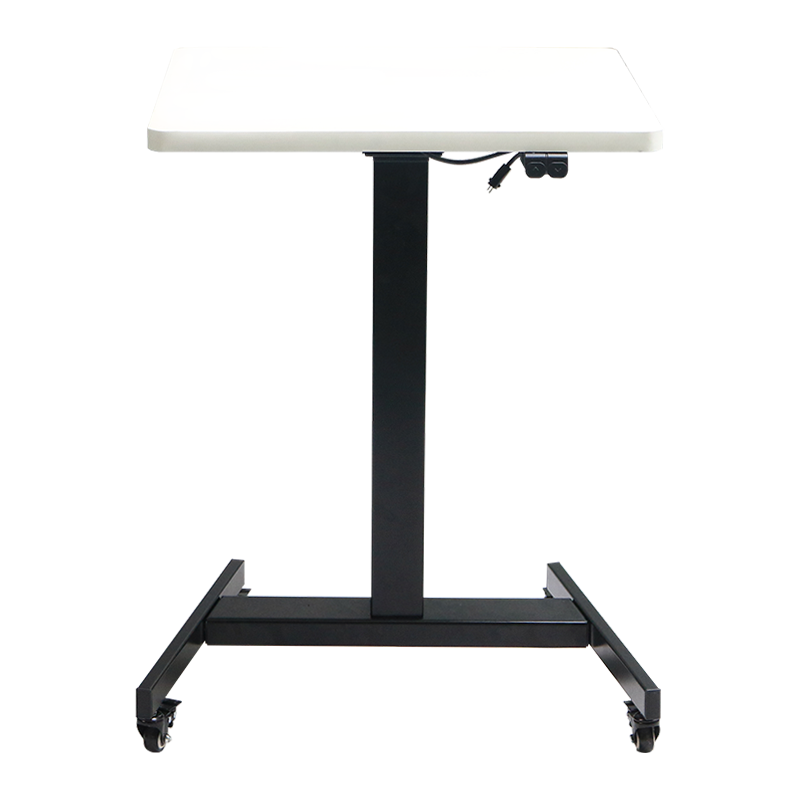
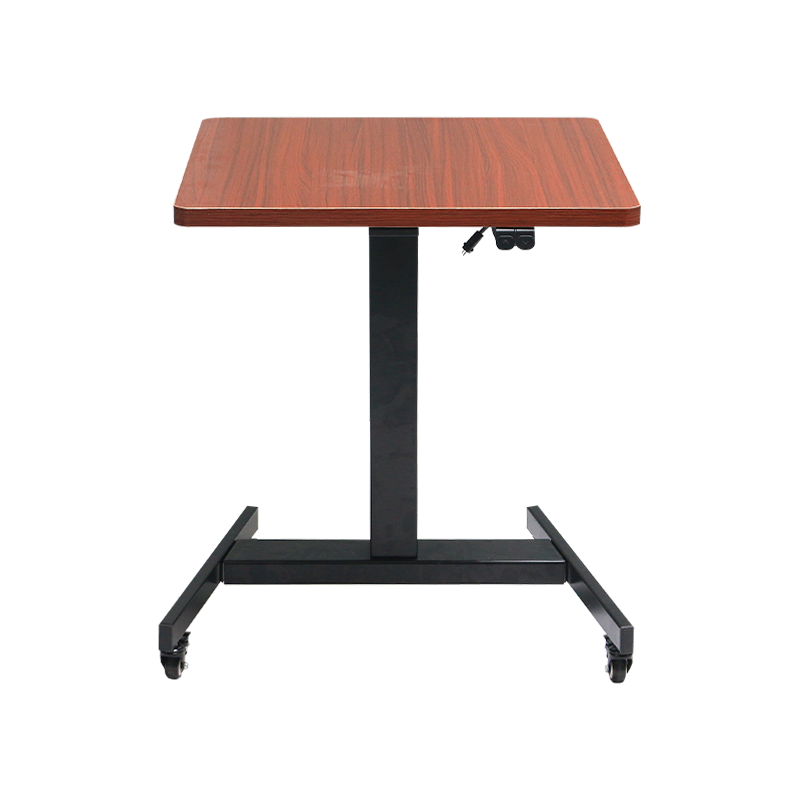
A single leg electric standing desk saves up to 40% of floor space compared to traditional four-leg or dual-column desk frames — not through compromise, but through intelligent structural design. The single central column eliminates the two rear legs that traditionally occupy 30–45 cm of depth behind the work surface, freeing that zone for storage, seating, or open circulation. For small offices, home offices, and shared workspaces where every square meter carries real cost, this difference is decisive.
This article explains how the Single Leg Electric Lift Table achieves its space advantage, what to look for when selecting one, and how to configure your workspace to get maximum benefit from a Space Saving Standing Desk format.
The Space Problem in Small Offices — and Why Desk Frames Are Part of It
The average small office or home office workstation occupies between 2.0 and 2.8 square meters when desk, chair clearance, and access paths are accounted for. A standard dual-column standing desk frame, with two rear legs projecting 40–50 cm from the back wall, consumes a disproportionate share of that area — and creates dead zones that cannot be used for storage or movement.
Research from workspace planning consultancies consistently finds that 30–40% of small office floor area is underutilized due to inefficient furniture footprints. Replacing a four-leg fixed desk with a Single Column Standing Desk on an electric lift mechanism addresses this directly — the underdesk area becomes fully open, allowing rolling pedestals, filing units, or simply unobstructed legroom on three sides rather than one.
Effective Under-Desk Clearance by Desk Frame Type (cm of open depth)
Figure 1: Usable under-desk depth for different frame configurations on a 70 cm deep work surface
How a Single Leg Electric Lift Table Achieves Its Space Advantage
The structural logic of a Single Leg Electric Lift Table centers the entire load-bearing and lifting mechanism in one central column rather than distributing it across two or four contact points. This approach works because modern electric actuators and telescoping column segments can generate sufficient lifting force (typically 80–120 kg rated capacity) through a single motorized spindle, eliminating the need for lateral frame members that consume floor space.
Key structural features that enable the space saving:
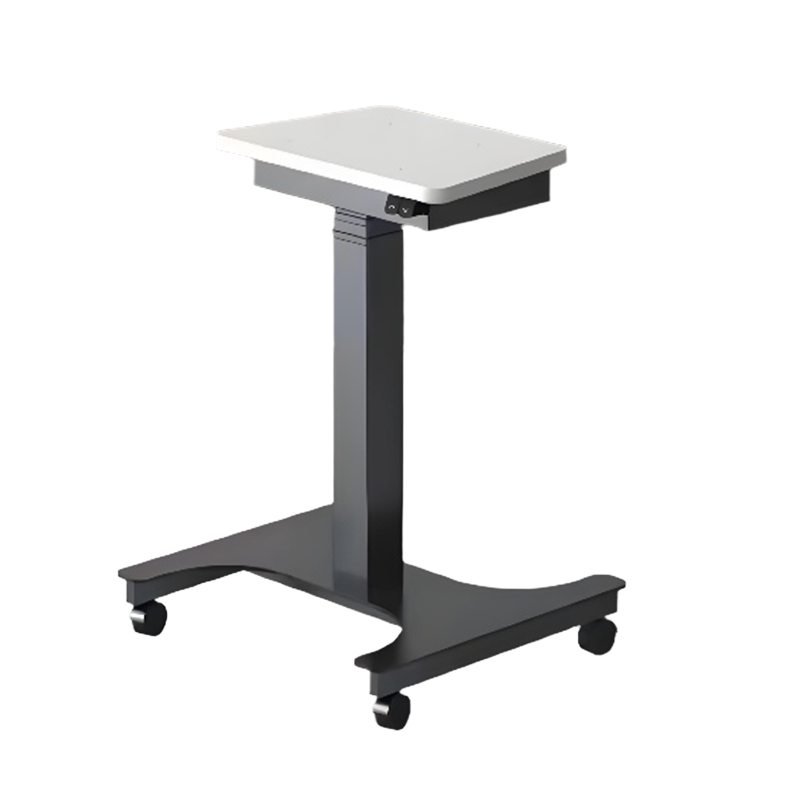
- Single telescoping column: Two- or three-stage column segments extend vertically with no lateral footprint beyond the base plate dimensions — typically 50 × 50 cm or smaller.
- Cantilevered tabletop: The work surface extends forward and to the sides from the central mount, leaving three sides of the underdesk zone completely unobstructed.
- Wall or corner mounting compatibility: The single-column format positions naturally against a wall, freeing circulation space in front and beside the desk.
- Compact base plate: Unlike T-frame or H-frame bases, a single-column base occupies less than 0.25 m² of floor contact area.
A Compact Electric Lift Table with a 100 × 60 cm desktop and single-column frame occupies approximately 0.6 m² of total floor footprint including the base — compared to 0.9–1.1 m² for an equivalent dual-column frame. In a 10 m² home office, this frees enough space for an additional storage unit or a visitor chair.
Single Column vs. Dual Column Standing Desks — Which Fits Your Workspace?
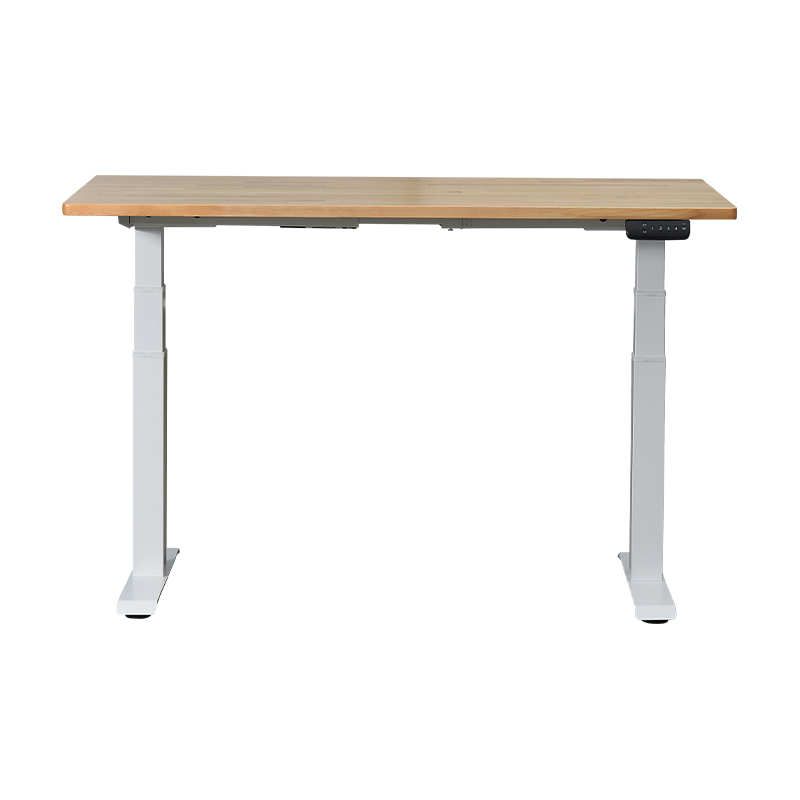
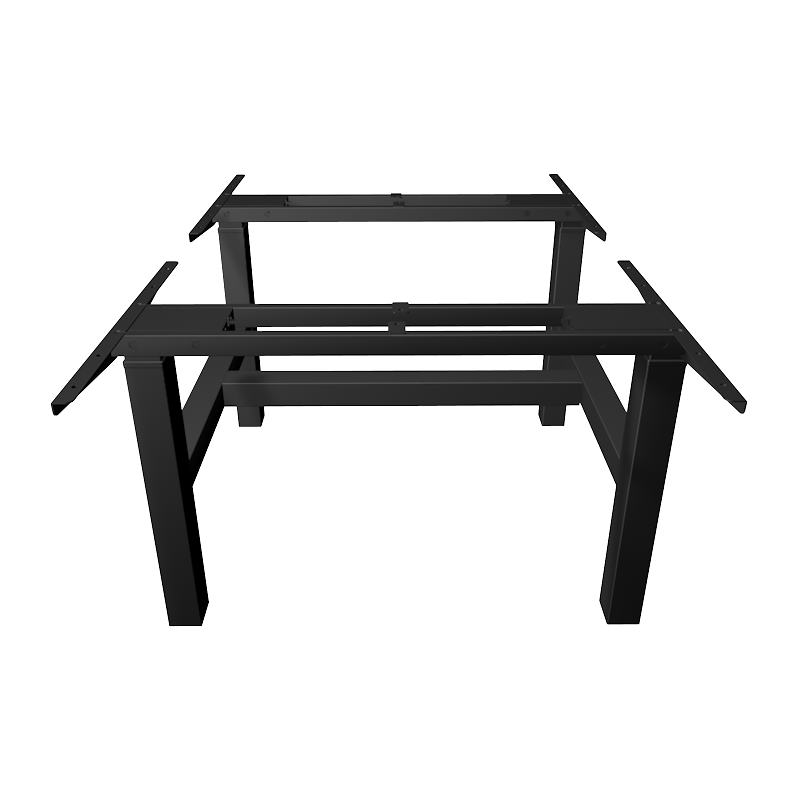
The choice between a single-column and dual-column electric standing desk is primarily determined by desktop size, load requirements, and available floor area. The table below summarizes the key differences to help you match the right frame to your actual needs.
| Feature | Single Column Standing Desk | Dual Column Standing Desk |
|---|---|---|
| Floor Footprint | 0.5–0.7 m² | 0.9–1.2 m² |
| Ideal Desktop Width | 60–120 cm | 100–200 cm |
| Load Capacity (typical) | 60–120 kg | 100–160 kg |
| Height Range | 60–125 cm | 62–128 cm |
| Under-Desk Clearance | 3 sides open | Front side open |
| Best Use Case | Small offices, home offices, compact workstations | Larger workstations, dual-monitor setups, shared desks |
| Corner/Wall Compatibility | Excellent | Moderate |
Health Benefits That Make the Electric Lift Mechanism Worth It
A single leg electric standing desk is not only a space solution — the electric lift mechanism drives real ergonomic benefits that a fixed-height desk or a manual crank desk cannot match in practice. Studies published in occupational health journals consistently show that workers who alternate between sitting and standing experience measurable health and productivity improvements.
- Lower back pain reduction: A 2020 study found that workers using sit-stand desks reported a 54% reduction in upper back and neck pain after four weeks of alternating posture work.
- Improved energy levels: Alternating between sitting and standing every 30–60 minutes is associated with a 87% reduction in fatigue compared to static sitting over an 8-hour workday.
- Productivity gains: Call center workers using height-adjustable desks showed a 46% increase in productive output during the first month versus those using fixed desks.
- Caloric expenditure: Standing burns approximately 8–10 additional calories per hour versus sitting — modest individually, but meaningful over years of daily work.
The electric mechanism is critical because it removes the friction of adjustment. A manual crank desk requires 30–40 rotations to change height — in practice, most users stop adjusting after the first week. An electric desk with memory presets changes height in under 20 seconds with a single button press, making the behavior sustainable.
Sit-Stand Desk Adoption Rate vs. Reported Back Pain Reduction Over 12 Weeks
Figure 2: Back pain reduction (%) over 12 weeks for consistent sit-stand desk users vs. fixed desk users
Key Specifications to Check Before Buying a Compact Electric Lift Table
Not all single-column electric standing desks perform equally. The following specifications determine whether a Compact Electric Lift Table will serve your workflow reliably over years of daily use.
Height Range and Column Travel
A useful height range for a single-leg electric standing desk spans from approximately 60 cm (sitting low) to 125 cm (standing tall). This accommodates users from 155 cm to 195 cm in height at both sitting and standing positions. Two-stage columns typically travel 400–500 mm; three-stage columns deliver 600+ mm of travel and a lower minimum height, which matters for shorter users or seated wheelchair access.
Load Capacity and Column Stability
A single-column frame must handle not only the desktop weight but the asymmetric load of monitors, peripherals, and user arm pressure. Look for a rated capacity of at least 80 kg and an anti-wobble design — quality manufacturers use inner guide rails or anti-rotation brackets within the column to prevent lateral play at extended heights. Wobble greater than 5 mm at full extension indicates insufficient column tolerance.
Motor Noise and Speed
A quality electric actuator operates at under 50 dB — comparable to a quiet conversation. Lift speed should be 25–38 mm per second; faster is convenient but not critical. Check whether the motor includes thermal overload protection, which prevents damage from repeated continuous cycles (important in shared office environments where height is adjusted frequently throughout the day).
Memory Presets and Control Panel
A control panel with at least 3–4 memory presets and a digital height display significantly improves daily usability. Presets allow instant return to your exact sitting height and standing height without manual readjustment — the feature that converts a sit-stand desk from a novelty to a daily habit.
| Specification | Minimum Acceptable | Recommended | Why It Matters |
|---|---|---|---|
| Height Range | 65–115 cm | 60–125 cm | Accommodates full range of user heights |
| Load Capacity | 60 kg | 80–120 kg | Supports monitors, peripherals, user loads |
| Motor Noise | Under 60 dB | Under 50 dB | Office environment compatibility |
| Memory Presets | 2 | 3–4 | Sustains daily sit-stand habit |
| Column Wobble at Max Height | Under 10 mm | Under 5 mm | Typing comfort and monitor stability |
Practical Setup Tips to Maximize Space in a Small Office
Choosing the right Space Saving Standing Desk is only part of the equation. How you position and configure the workspace determines how much of the space saving you actually realize.
- Corner placement: Position the single-column desk in a corner with the column base against the wall junction. This configuration keeps two walls as the desk's backdrop, freeing the entire room center for movement.
- Under-desk storage: The three-sided open underdesk space allows a compact rolling pedestal (typically 40 × 50 cm) to be stored underneath when not in use — something impossible with a four-leg or H-frame desk.
- Wall-mounted monitor arm: Combining a single-column desk with a wall-mounted or desk-clamp monitor arm removes the monitor stand from the desktop, recovering 15–20 cm of depth for active workspace.
- Cable routing through the column: Many Single Leg Electric Lift Table models include an internal cable channel through the column. Use it — surface cable trays add visual clutter and reduce perceived space.
- Anti-fatigue mat sizing: Match the mat to your actual standing zone — typically 50 × 70 cm. Oversized mats extend the desk footprint and create a tripping hazard in tight spaces.
About Fengyi Intelligent Furniture Technology Co., Ltd.
Fengyi Intelligent Furniture Technology Co., Ltd. is located in Ningbo, the economic center of the Yangtze River Delta. Established in 2021, Fengyi has grown to a team of more than 30 employees operating across a 5,000 square meter facility.
As a professional China Single Leg Electric Standing Desk Manufacturer and Single Leg Electric Lift Table Factory, Fengyi specializes in the R&D, production, and sales of steel and wooden structural products. The company's product range includes ergonomic lift desks, workbenches, ergonomic chairs, and ergonomic children's study desks.
Fengyi's overseas market spans the United States, Canada, Australia, the United Kingdom, South Korea, Japan, Taiwan, and other countries and regions. With a commitment to quality manufacturing and responsive service, Fengyi continues to expand its partnerships with international distributors and workspace solution providers worldwide.
Frequently Asked Questions
Q1: Is a single leg electric standing desk stable enough for dual monitor setups?
Yes, provided the desk's rated load capacity is sufficient and the monitors are positioned centrally rather than offset to one side. A single-column desk with an 80 kg or higher load rating handles two standard monitors (combined 15–20 kg) comfortably. Using a dual-monitor arm that clamps to the desk center rather than mounting monitors on individual stands further distributes the load more symmetrically and reduces lateral torque on the column.
Q2: What desktop size works best with a Single Column Standing Desk?
Desktop widths of 80–120 cm pair best with single-column frames. Tops wider than 120 cm generate significant cantilever torque on the column, which can cause wobble and reduce the column's effective service life. If you need a wider work surface, a dual-column frame is a more appropriate structural match. For space-constrained offices, a 100 × 60 cm desktop on a single-column frame provides a practical primary workstation.
Q3: How long does a Compact Electric Lift Table motor typically last?
Quality electric actuators in sit-stand desks are rated for 20,000–50,000 lift cycles. At four adjustments per workday over 250 working days per year, that translates to 20–50 years of theoretical motor life. In practice, the control electronics and cable connections are more likely to require attention before the motor itself fails. Models with thermal overload protection significantly extend motor longevity in high-frequency use environments.
Q4: Can a single leg electric standing desk be used on carpet?
Yes, but stability depends on carpet thickness and pile firmness. On carpet deeper than 15 mm, a base plate with wider feet or a rigid anti-slip mat placed under the base improves stability. Check that the base leveling feet (most quality frames include adjustable feet) are fully extended to compensate for any carpet compression differential.
Q5: How much space does a Space Saving Standing Desk actually free up compared to a fixed desk?
Replacing a standard four-leg fixed desk (typical frame footprint 0.9–1.1 m²) with a single-column electric standing desk (base footprint 0.5–0.65 m²) frees approximately 0.3–0.5 m² of floor contact area. In a 10 m² room, that is 3–5% of total floor space — enough for a compact storage unit or a second seating option. The functional gain is larger than the numbers suggest, because the freed space is contiguous and usable, not fragmented between desk legs.