 English
 Deutsch
 русский

Quick Answer
A two-leg electric lift table is a height-adjustable desk with two motorized leg columns that raise and lower the tabletop at the press of a button. With a typical height range of 630mm–1270mm, it supports both sitting and standing postures for users of all ages — from children to adults. It is the most space-efficient form of ergonomic sit-stand workstation available, making it ideal for home offices, studies, bedrooms, and compact commercial spaces. When choosing one in 2026, prioritize motor quality, height range, lifting capacity, anti-collision safety, and memory preset functionality.
What Exactly Is a Two-Leg Electric Lift Table?
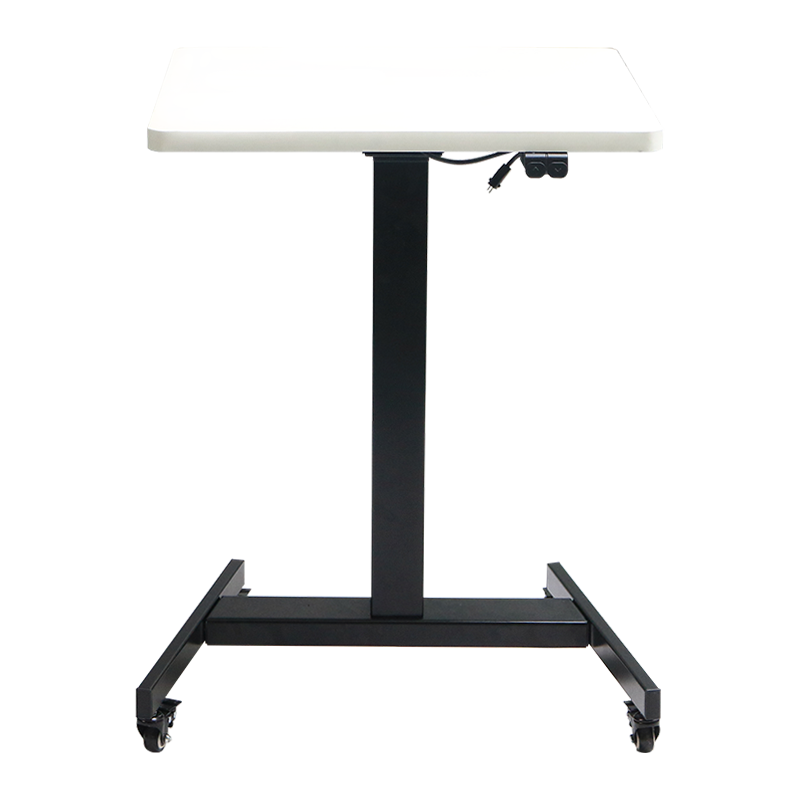
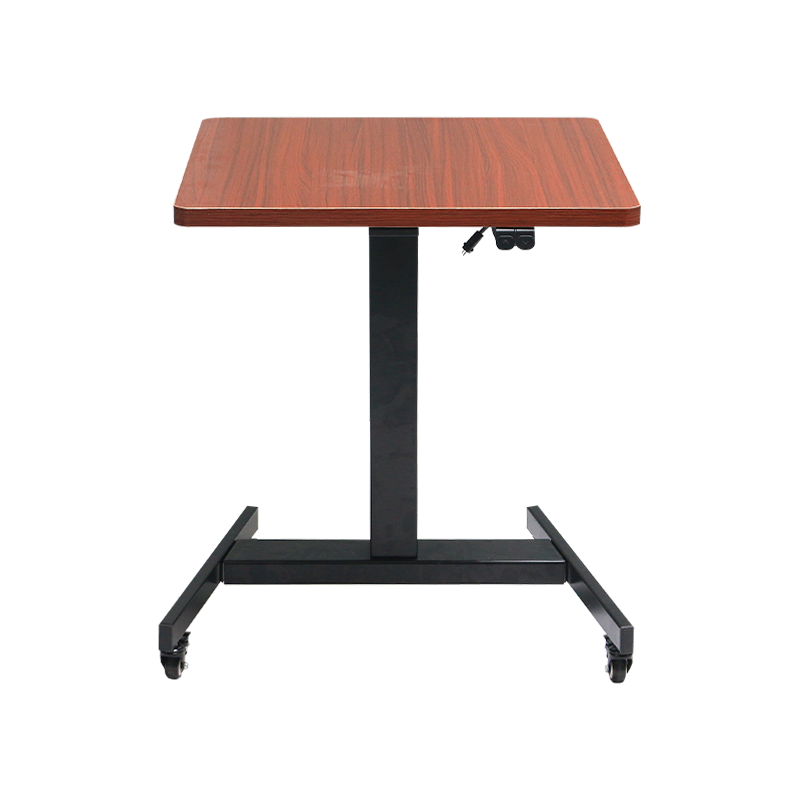
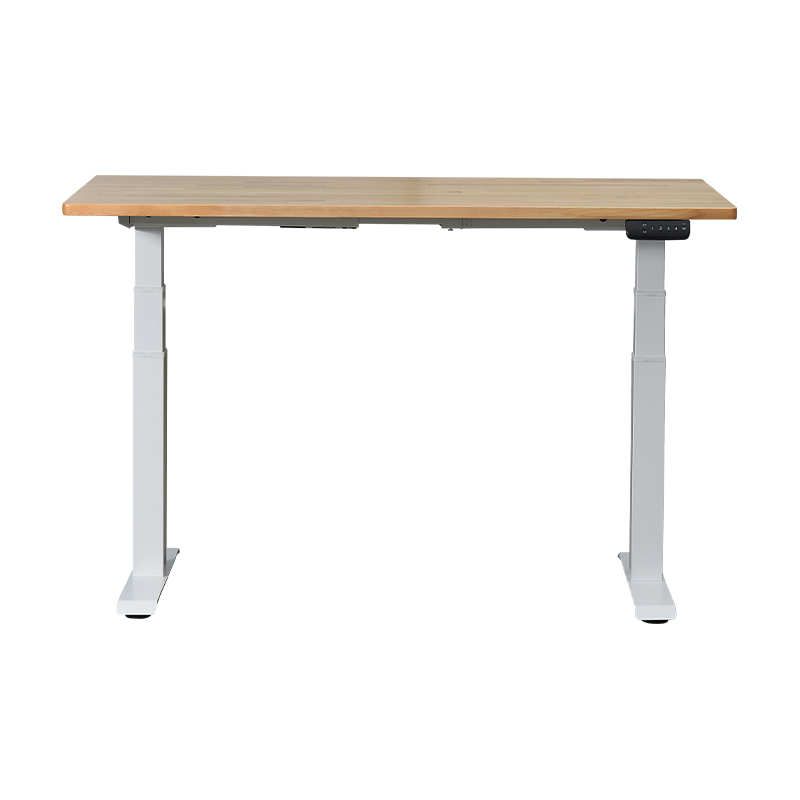
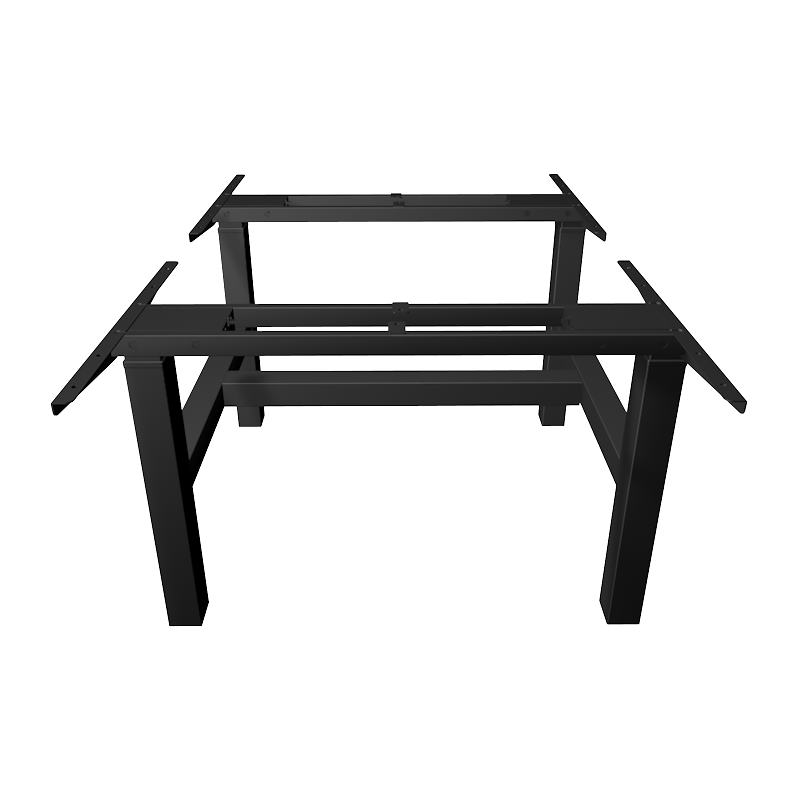
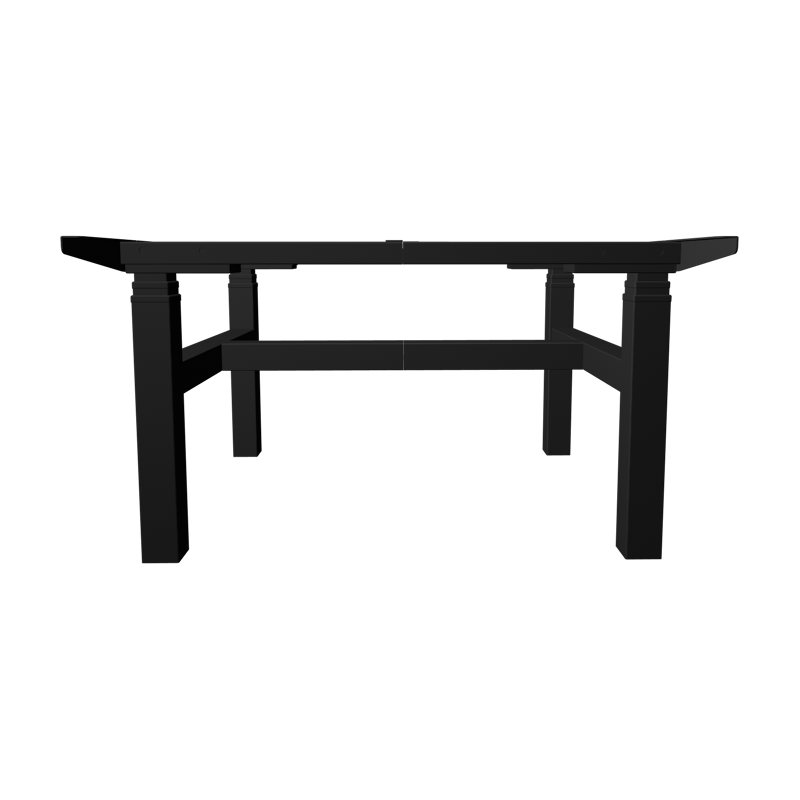
A two-leg electric lift table — also referred to as a two leg automatic lift desk or dual-column sit-stand desk — is a motorized height-adjustable workstation supported by two vertical lifting columns, one at each end of the desk frame. Unlike four-leg or C-frame designs, the two-leg configuration uses a minimalist structural footprint that maximizes usable floor space while still delivering stable, programmable height adjustment across a broad range.
The motorized lift mechanism — typically driven by a single or dual motor system housed within each leg column — responds to push-button or touchpad commands, raising or lowering the entire tabletop smoothly and quietly. Most modern units support height memory presets, allowing users to save two to four preferred heights and return to them instantly without manual adjustment.
As an ergonomic standing workstation, it addresses one of the most significant workplace health issues of the 2020s: the physical toll of continuous static sitting. Research published in occupational health journals consistently links prolonged sitting with increased risk of musculoskeletal disorders, reduced circulation, and diminished cognitive performance. Height adjustable office desks that enable regular posture transitions — alternating between sitting and standing throughout the day — are now considered a baseline standard for health-conscious workspace design.
Minimalist Footprint
Two leg columns occupy significantly less floor space than four-leg or U-frame alternatives, making the design ideal for corners, small studies, and compact home office setups.
One-Button Height Control
A single button press triggers smooth, quiet motorized adjustment. Modern smart adjustable desk frames include digital displays showing height in real time, with programmable memory slots.
Universal Height Range
With adjustment typically spanning 630mm to 1270mm, a single desk serves the whole family — from primary school children to tall adults — without requiring different furniture for different users.
How a Two-Leg Electric Lift Table Works: The Technology Inside
Understanding the mechanics helps you evaluate quality when comparing models. Each leg column contains a telescoping steel tube assembly driven by an electric motor through a worm-gear or lead-screw transmission. When activated, the motor converts rotational motion into linear vertical movement, extending or retracting the inner tubes to raise or lower the tabletop.
Single Motor vs. Dual Motor Lift Table
The most practically important technical distinction is whether the desk uses one shared motor or an independent dual motor lift table configuration with one motor per leg. Here is how they compare:
| Feature | Single Motor | Dual Motor |
|---|---|---|
| Typical Lifting Capacity | 50–80 kg | 80–150 kg |
| Noise Level | Moderate | Quieter (<45 dB) |
| Lifting Speed | 25–32 mm/s | 38–50 mm/s |
| Wobble at Max Height | More noticeable | Minimal |
| Best For | Light home/study use | Professional / multi-monitor |
Anti-Collision Detection
Quality electric sit stand desks incorporate an anti-collision sensor system — typically a current or force sensor integrated into the motor circuit. When the lifting mechanism encounters unexpected resistance (a chair, a child's hand, a pet), the system immediately halts and reverses. This safety feature is not optional for households with children; always verify it is present in the product specification before purchasing.
Smart Adjustable Desk Frame and Memory Presets
A smart adjustable desk frame includes a control panel that stores height presets — commonly two to four positions. In a family setting, each user can have their preferred sit and stand heights saved. Some units add a sit-stand reminder timer that alerts users via a visual or audio cue to change posture after a set period, reinforcing healthy usage habits without requiring willpower alone.
Features Buyers Prioritize When Selecting an Electric Lift Table (%)
Based on aggregated consumer survey data from ergonomic furniture purchase studies. Respondents could select multiple priorities.
The Health Case for an Ergonomic Standing Workstation in 2026
The adoption of sit-stand desks has accelerated dramatically since 2020, driven by the global shift toward home-based and hybrid working arrangements. But the health evidence behind the two leg automatic lift desk is substantive and well-documented — not simply a wellness trend.
Spinal Health and Posture
Sitting for more than 6 continuous hours places approximately 140% more compressive force on lumbar discs than standing does. Over months and years, this contributes to disc compression, chronic lower back pain, and cervical strain from monitor viewing angles that shift as users slump. A height adjustable office desk that is correctly set up for both seated and standing positions keeps the spine in a neutral, load-balanced alignment throughout the working day.
For children, the benefit is even more pronounced. During growth years, sustained poor posture at a fixed-height desk can affect spinal development. A two-leg electric lift table that adjusts as a child grows — from primary school age through adolescence — removes the need to purchase new furniture at each growth stage while consistently supporting healthy seated and working postures.
Cognitive Performance and Focus
A 2022 review in the Journal of Physical Activity and Health found that standing intermittently for 30-minute periods during cognitive work tasks improved participants' self-reported focus scores by an average of 23% compared to prolonged seated control groups. Standing increases blood flow to the prefrontal cortex, which governs attention, decision-making, and creative thinking — directly relevant for both professional knowledge workers and students studying at an ergonomic standing workstation.
Energy and Fatigue Reduction
Static sitting suppresses metabolic rate and triggers a cascade of fatigue signals. Users who alternate between sitting and standing with an electric sit stand desk report measurably lower afternoon energy dips — a phenomenon sometimes called the "post-lunch slump" — because postural changes keep the musculoskeletal and cardiovascular systems lightly active throughout the day.
Self-Reported Focus Score: Continuous Sitting vs. Sit-Stand Alternation
Illustrative focus score trends (0–100 scale) over an 8-hour workday, based on pooled data from ergonomic intervention studies. Sit-stand users maintain significantly higher focus levels in afternoon hours.
Who Benefits Most From a Two-Leg Electric Lift Table?
While virtually any desk user benefits from height adjustability, the two-leg design is particularly well-suited to specific user profiles and environments. Here are the use cases where it delivers the clearest value:
Home Office Workers
Remote and hybrid workers who spend 6–10 hours daily at a workstation see the strongest return on a height adjustable office desk. The compact two-leg format fits bedroom corners and converted living spaces without dominating the room.
School-Age Children and Teenagers
Growing children benefit from a desk that adjusts with them year to year. The ergonomic sit-stand option for a kids' study desk supports spine development and has been linked to improved concentration during homework sessions.
Multi-User Households
A single two leg automatic lift desk with memory presets can serve a child at one height, a parent at sitting height, and a tall adult at standing height — eliminating the need for multiple desks with different fixed heights.
Small Business Workstations
Startups, co-working spaces, and small office setups favor the two-leg design for its space efficiency. Rows of electric sit stand desks in a compact office footprint maximize density while providing full ergonomic functionality to every user.
Users with Back or Neck Issues
Physiotherapists and occupational health professionals increasingly recommend ergonomic standing workstations for clients managing chronic lumbar or cervical spine conditions, as an alternative to prolonged therapeutic rest or medication.
Creative Professionals
Graphic designers, architects, photographers, and video editors who switch between detailed seated close-up work and broader standing review sessions find the instant height adjustment of a smart adjustable desk frame dramatically reduces workflow interruption.
Complete 2026 Buying Guide: What to Look for in a Two-Leg Electric Lift Table
With dozens of options now on the market, the following criteria will help you identify a genuinely high-quality two-leg electric lift table rather than one that simply looks the part in marketing photos.
1. Height Range: Does It Cover All Your Users?
The minimum height determines whether the desk works for children; the maximum determines whether it is tall enough for standing use by taller adults. A range of 630mm to 1270mm comfortably covers children from approximately 7 years of age up to adults of 190cm height. If your household only includes adults, a narrower range (e.g., 710mm–1220mm) may be acceptable. Always measure against your own height before purchasing.
2. Lifting Capacity: Match It to Your Setup
A basic laptop setup needs only 30–40 kg of capacity. A dual-monitor workstation with desktop computer, docking station, and peripherals can easily reach 50–70 kg. A dual motor lift table typically provides 80–150 kg, which is more than adequate for the most demanding desktop setups. Always include the weight of any monitor arms, speakers, or accessories in your calculation — not just the tabletop load alone.
3. Stability Testing: The Wobble Test at Maximum Height
Lateral stability at maximum extended height is where many lower-quality two-leg desk frames fail. Look for independently tested stability data — a lateral displacement of less than 3mm under a 10 kg side load at full extension is a reasonable benchmark for a quality frame. Steel tube wall thickness (typically 2mm–3mm for quality frames vs. 1.2mm for budget options) is the primary determinant of this performance.
4. Control Panel: Simplicity vs. Functionality
Entry-level models offer up-down buttons only. Mid-range and quality models add: a digital height display (essential for repeatable accuracy), 2–4 memory presets, a child lock to prevent accidental adjustment, and sometimes a sit-stand reminder. For a shared family desk or professional workstation, memory presets and a display are near-essential for practical daily use.
5. Frame Width Adjustability
A smart adjustable desk frame should accommodate a range of tabletop widths — commonly 1,000mm to 1,800mm. This allows you to pair the frame with a tabletop of your choice, or replace a worn tabletop without discarding the entire mechanism. Look for frames with adjustable cross-beam spans to confirm compatibility with your intended desktop dimensions.
6. Certifications and Safety Standards
For export markets, look for CE certification (Europe), FCC compliance (United States), and where possible BIFMA (Business and Institutional Furniture Manufacturer's Association) testing compliance, which subjects desk frames to 10-year simulated usage cycles. These certifications are not guarantees of quality but indicate the manufacturer has submitted the product to recognized independent testing protocols.
Typical Specification Ranges by Desk Tier (Entry / Mid / Premium)
Relative performance scores (0–100) across four key specification categories for entry, mid-range, and premium two-leg electric lift table tiers.
Space Planning and Ergonomic Setup for Your Electric Sit Stand Desk
Buying the right desk is only half the equation. Correct ergonomic setup determines whether the investment actually delivers the health and productivity benefits it promises. Follow these setup principles for the best outcome:
Setting Your Seated Height
Sit comfortably in your chair with feet flat on the floor (use a footrest if needed). Adjust the desk until your elbows rest at a natural 90-degree angle with forearms parallel to the tabletop. Your monitor top edge should be at or slightly below eye level. For most adults seated in a standard chair (seat height 43–48cm), desk seated height falls between 70cm and 76cm.
Setting Your Standing Height
Stand naturally with shoulders relaxed. Raise the desk until your elbows again rest at 90–100 degrees with forearms lightly supported. This typically places the desk surface at hip to mid-torso height. For a 170cm adult, standing desk height is commonly 100–108cm. Save this as a second memory preset so you can switch instantly. Anti-fatigue mats placed under the standing position are strongly recommended for sessions over 30 minutes.
Space Requirements for a Two-Leg Design
One of the primary advantages of the two-leg electric lift table is its compact spatial footprint. Unlike U-frame or four-leg designs, the two vertical columns require no side clearance beyond the tabletop edge itself. A 1200mm x 600mm tabletop needs approximately 1400mm x 800mm of floor space when accounting for chair clearance and cable management. This makes it genuinely viable in rooms as small as 9–10 square meters.
How Long Should You Stand Each Day?
Current ergonomic guidelines from bodies including NICE (UK) and OSHA recommend alternating between sitting and standing in roughly 30-minute cycles, targeting at least 2–4 hours of standing time per 8-hour workday. This is a cumulative total, not continuous standing. Start conservatively if you are new to stand-up working — 30–45 minutes of total standing in the first week, building gradually over 4–6 weeks to avoid lower limb fatigue.
Desk Frame Design Comparison: Two-Leg vs. Four-Leg vs. C-Frame (Radar)
Relative performance comparison across six criteria for the three main electric desk frame configurations. The two-leg design leads in space efficiency, aesthetics, and overall value.
5 Common Mistakes When Buying a Height Adjustable Office Desk
Knowing what to look for is important, but avoiding these five purchase mistakes is equally valuable — they account for the majority of buyer regret in the ergonomic desk category:
- Ignoring the minimum height. Buyers focused on standing height often overlook whether the desk lowers enough for seated use — or for their children. A desk that bottoms out at 750mm is simply too high for a child or for a user seated in a low chair.
- Underestimating load requirements. A multi-monitor setup, ultrawide display, or large tabletop adds weight quickly. Buyers who select a desk based on a single laptop scenario often end up with a frame that wobbles under a heavier configuration purchased later.
- Choosing a frame-only option without checking tabletop compatibility. Desk frames and tabletops are often sold separately. Confirm that the adjustable cross-beam span covers your intended tabletop width before purchasing. Frame widths typically range from 900mm to 1,800mm but not all spans are supported by all frames.
- Overlooking cable management. A two-leg electric lift table with no cable tray or routing channels turns into a tangled mess at standing height as cables stretch or pull. Built-in or compatible cable management is worth specifying explicitly, particularly for multi-monitor setups.
- Buying based on the lowest asking outlay without checking after-sales support. Motors and control boards on lower-quality units have higher failure rates. A supplier that provides a clear warranty period, replacement parts availability, and accessible technical support is worth the consideration — especially for a product you intend to use daily for 5–10 years.
About Fengyi Intelligent Furniture Technology Co., Ltd.
Fengyi Intelligent Furniture Technology Co., Ltd. is headquartered in Ningbo — a major economic hub in the Yangtze River Delta — and was established in 2021. The company operates with more than 30 employees across a 5,000-square-meter production and warehouse facility, and is recognized as both a professional China two-leg automatic lift desk manufacturer and a dedicated two-leg electric lift table factory.
The company specializes in the research, development, production, and sales of steel and wooden structural products, with a core product range covering ergonomic lift desks, standing workbenches, ergonomic chairs, and ergonomic children's study desks. Fengyi's overseas market reach extends across the United States, Canada, Australia, the United Kingdom, South Korea, Japan, Taiwan, and additional regions — reflecting a product quality standard suited to the regulatory and consumer expectations of demanding international markets.
Two core advantages define the Fengyi product line. First, a commitment to space optimization: the two-leg lifting table structure, with its minimalist lines, is designed to free up usable floor space and integrate seamlessly into compact studies, bedrooms, and office corners without compromising on function or visual appeal. Second, a precision-engineered free-lifting system: the electric mechanism responds to a single button press, supporting smooth, quiet height adjustment across the full 630mm–1270mm range — covering children, teenagers, and adults of all heights in a single unit.
With an ergonomics-centered design philosophy — built around the principle that sit-stand alternation protects the spine, supports children's growth, and genuinely improves both learning and professional focus — Fengyi continues to develop and expand its range of intelligent adjustable furniture for domestic and global customers seeking verified quality backed by accountable after-sales service.